Adobe Max 2025 - Los Angeles
Stepping into the vibrant epicenter of creativity: the unforgettable energy and groundbreaking innovation of Adobe Max 2025, live from the heart of Los Angeles.
Events
Oct 28, 2025
I had always imagined what it would be like. Seeing the news, the launches, the impressive videos... but being at Adobe Max in Los Angeles was something else entirely. It was about feeling the future of design arrive not as a distant concept, but as a tangible reality, full of real people creating incredible things.
As a first-time attendee, it was more than a learning experience – it was a confirmation. A confirmation that our work as designers matters more than ever, and that the tools are evolving not to replace us, but to elevate us. I’ll share not only what I saw, but what I felt this means for all of us.
🎯 The Big Revelation: The Designer Is (and Always Will Be) at the Center
The theme that echoed in every keynote and conversation was clear: AI is an incredible tool, but the designer is the architect. The feeling in the air wasn’t one of fear, but of excitement – finally, we could delegate repetitive tasks and focus on what truly matters: creative intent.
What struck me was seeing how every new tool presented had a clear purpose: to amplify human vision, not replace it. And that changes everything.
🛠️ The Tools That Will Redefine Our Day-to-Day (In Detail)
For Us, Graphic Designers (The Event's Main Focus):
Illustrator – The "Ideation Assistant": The "Vectorize from Prompt" feature isn’t just a trick. It’s a new way to think. Describing a concept ("an organic pattern like tree roots") and watching Illustrator generate dozens of vector variations in seconds... this completely changes the visual brainstorming phase. The tool has become a partner in creative exploration.
Photoshop – The End of Tedious Work: The contextual AI photo compositing was jaw-dropping. Inserting an element into a scene and watching the tool automatically adjust lighting, shadow, perspective, and even texture? That’s not just magic – it’s the return of time. Time we can use to think about the concept, the narrative, the emotion the image needs to convey.
InDesign – Automation with Soul: The integration between Firefly and dynamic data in InDesign was one of the most practical demonstrations. Imagine a catalog where product images are generated automatically to fit the layout and brand style as new items are added to a spreadsheet. This is automation that doesn’t lose visual identity.
And For Us in UX/UI? The Revolution is Indirect (But Powerful):
It's true that Adobe Max has always shined brightest on visual creation tools. But looking closely, the implications for UX/UI are profound and exciting:
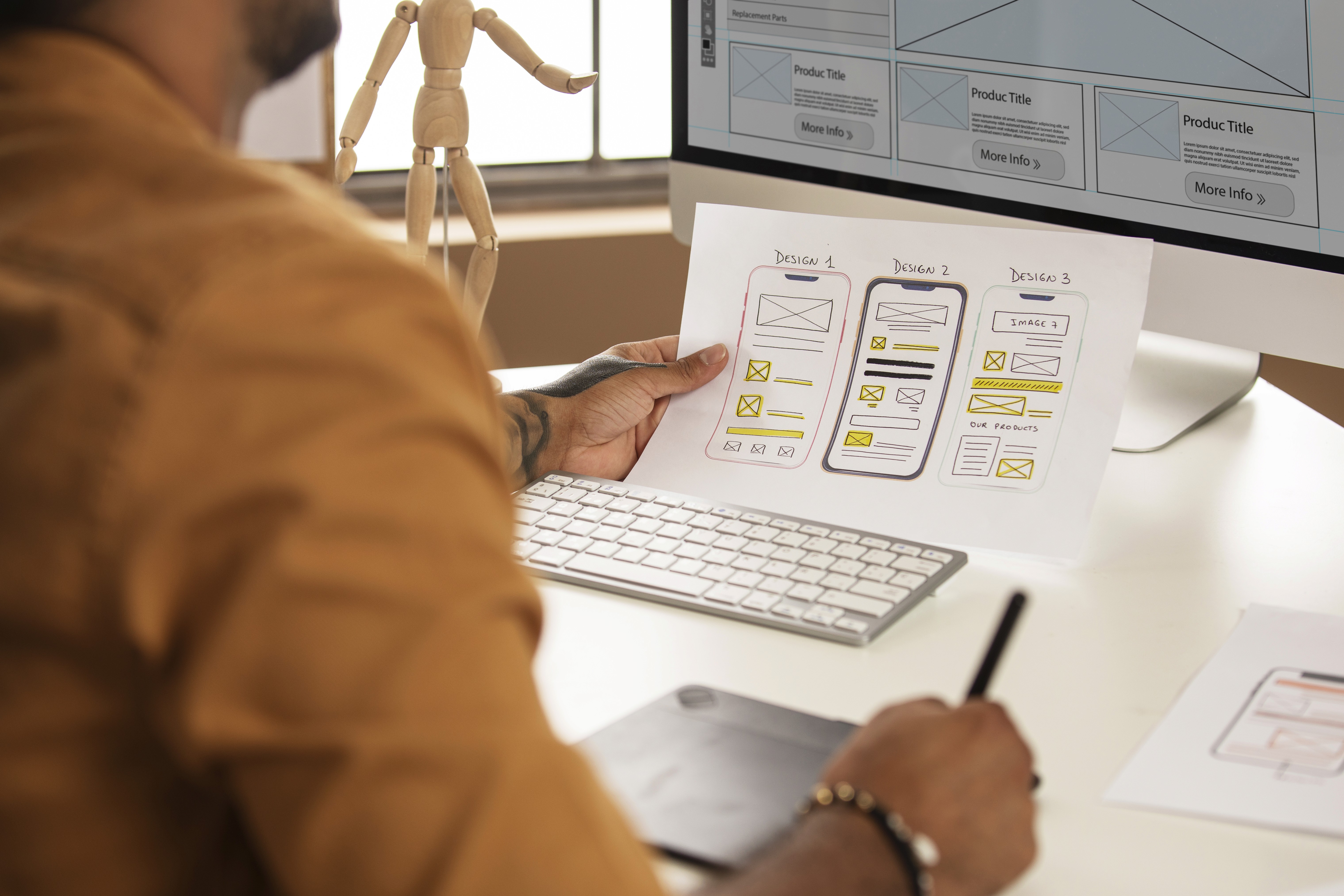
The Superpower of Visual Prototyping: With the new capabilities of Photoshop and Illustrator, creating high-fidelity mockups, realistic comps, and even product concept videos has become exponentially faster. This means we can test and validate interface and experience ideas with stakeholders and users using near-photographic visual materials in a fraction of the time.
Design Systems That "Grow": The intelligence behind Firefly and vectorization tools isn't just for creating from scratch. It can be applied to generate consistent variations of UI components from a base style. Need 10 different states for a button, all cohesive? AI can help explore that visual family while maintaining system identity.
The Big Lesson for UX: "Designing for Human-AI Collaboration": The biggest takeaway for our field was observing how Adobe is rethinking the interface of the tools themselves to integrate AI. Creativity sliders, transparent control panels, and workflows that keep the designer in command. This is a living case study for any UX Designer building products that involve generative AI. It was a masterclass in building trust and control into complex interfaces.
🧠 Beyond the Tools: The Skills Becoming Crucial
The event made it clear our skill set is expanding:
Creative Articulation (Strategic Prompting): The new designer literacy. It’s not about typing anything, but about knowing how to guide AI with narrative and visual precision. It's describing colors, atmospheres, style references, and emotional intent.
Curation & Critical Editing: With AI generating dozens of options in seconds, our ability to select, combine, and refine the best result becomes a superpower. Good taste and a critical eye are our most valuable currency.
Systemic & Ethical Thinking: Understanding the impact of our visual choices, the carbon footprint of heavy cloud files, and the responsibility for the veracity of generated content are debates that have moved from niche to creative mainstream.
💫 The Heart of Design: What Can Never Be Generated
And here is my most moving reflection, the one I carry as a mantra after all I saw: AI can generate images, but it can never generate a vision. It can compose layouts, but it will never understand the human story behind each project. It can replicate styles, but it will never know why a certain color makes a specific audience's heart race.
Our work – human work – is what gives soul to the digital. It’s the empathy that makes us ask, "How will this make people feel?" It’s the intuition that chooses to break a design rule at the exact right moment for impact. It’s the courage to defend a fragile idea that no one understands yet, but that will change everything.
AI is the ladder. We are the architects who see the top. It is the fastest paintbrush in the world. We are the hands that tremble with emotion while making the final stroke. It gives us the precious time we’ve always asked for – time to feel, to think deeply, to create with meaning, not just efficiency.
💡 My Biggest Conclusion as a Designer
Leaving Adobe Max gave me a clarity I didn’t expect: there has never been a better time to be a designer.
The tools are freeing us from the mechanical part of the work so we can focus on what only we humans do well:
Understanding emotions and translating them into visual experiences
Telling stories that connect brands and people
Thinking strategically about how each element serves a greater purpose
Making ethical choices about how technology is applied
Creating not just what is possible, but what is meaningful
Generative AI is not our competitor – it is our new ink, our new brush, our new typography. And like any new tool in the history of design, those who will shine aren’t those who merely know how to use it, but those who know what to do with it.
🌟 The Impact on the Market and Our Careers
This evolution also signals market changes:
More Conceptual Briefs: Clients may start asking for "an identity that conveys X feeling" instead of "a blue logo."
Valuation of Strategy: The price of our work may shift even more from execution to conception and creative direction.
New Roles: Space is opening for Prompt Designers, Creative AI Curators, and Generative Design Ethics Specialists.
✨ For Those Who Have Never Been
If you're reading this and thinking "one day I’ll go," let me tell you: it’s worth every effort. Not just for the launches (which you can see online), but for the collective energy.
It’s seeing thousands of equally passionate people, it’s feeling like you’re part of something bigger, it’s coming home not just with new tools in your bag, but with new passion in your heart and new possibilities in your mind.
The future of design isn’t scary. It’s exciting. And after Adobe Max 2025, I am absolutely certain: we designers are in charge of that future.
And you, how are you preparing for this new chapter in design? Which tools or skills do you think will make the biggest difference in your journey? Tell me everything in the comments – this conversation is just getting started!
More to Discover

Adobe Max 2025 - Los Angeles
Stepping into the vibrant epicenter of creativity: the unforgettable energy and groundbreaking innovation of Adobe Max 2025, live from the heart of Los Angeles.
Events
Oct 28, 2025
I had always imagined what it would be like. Seeing the news, the launches, the impressive videos... but being at Adobe Max in Los Angeles was something else entirely. It was about feeling the future of design arrive not as a distant concept, but as a tangible reality, full of real people creating incredible things.
As a first-time attendee, it was more than a learning experience – it was a confirmation. A confirmation that our work as designers matters more than ever, and that the tools are evolving not to replace us, but to elevate us. I’ll share not only what I saw, but what I felt this means for all of us.
🎯 The Big Revelation: The Designer Is (and Always Will Be) at the Center
The theme that echoed in every keynote and conversation was clear: AI is an incredible tool, but the designer is the architect. The feeling in the air wasn’t one of fear, but of excitement – finally, we could delegate repetitive tasks and focus on what truly matters: creative intent.
What struck me was seeing how every new tool presented had a clear purpose: to amplify human vision, not replace it. And that changes everything.
🛠️ The Tools That Will Redefine Our Day-to-Day (In Detail)
For Us, Graphic Designers (The Event's Main Focus):
Illustrator – The "Ideation Assistant": The "Vectorize from Prompt" feature isn’t just a trick. It’s a new way to think. Describing a concept ("an organic pattern like tree roots") and watching Illustrator generate dozens of vector variations in seconds... this completely changes the visual brainstorming phase. The tool has become a partner in creative exploration.
Photoshop – The End of Tedious Work: The contextual AI photo compositing was jaw-dropping. Inserting an element into a scene and watching the tool automatically adjust lighting, shadow, perspective, and even texture? That’s not just magic – it’s the return of time. Time we can use to think about the concept, the narrative, the emotion the image needs to convey.
InDesign – Automation with Soul: The integration between Firefly and dynamic data in InDesign was one of the most practical demonstrations. Imagine a catalog where product images are generated automatically to fit the layout and brand style as new items are added to a spreadsheet. This is automation that doesn’t lose visual identity.
And For Us in UX/UI? The Revolution is Indirect (But Powerful):
It's true that Adobe Max has always shined brightest on visual creation tools. But looking closely, the implications for UX/UI are profound and exciting:
The Superpower of Visual Prototyping: With the new capabilities of Photoshop and Illustrator, creating high-fidelity mockups, realistic comps, and even product concept videos has become exponentially faster. This means we can test and validate interface and experience ideas with stakeholders and users using near-photographic visual materials in a fraction of the time.
Design Systems That "Grow": The intelligence behind Firefly and vectorization tools isn't just for creating from scratch. It can be applied to generate consistent variations of UI components from a base style. Need 10 different states for a button, all cohesive? AI can help explore that visual family while maintaining system identity.
The Big Lesson for UX: "Designing for Human-AI Collaboration": The biggest takeaway for our field was observing how Adobe is rethinking the interface of the tools themselves to integrate AI. Creativity sliders, transparent control panels, and workflows that keep the designer in command. This is a living case study for any UX Designer building products that involve generative AI. It was a masterclass in building trust and control into complex interfaces.
🧠 Beyond the Tools: The Skills Becoming Crucial
The event made it clear our skill set is expanding:
Creative Articulation (Strategic Prompting): The new designer literacy. It’s not about typing anything, but about knowing how to guide AI with narrative and visual precision. It's describing colors, atmospheres, style references, and emotional intent.
Curation & Critical Editing: With AI generating dozens of options in seconds, our ability to select, combine, and refine the best result becomes a superpower. Good taste and a critical eye are our most valuable currency.
Systemic & Ethical Thinking: Understanding the impact of our visual choices, the carbon footprint of heavy cloud files, and the responsibility for the veracity of generated content are debates that have moved from niche to creative mainstream.
💫 The Heart of Design: What Can Never Be Generated
And here is my most moving reflection, the one I carry as a mantra after all I saw: AI can generate images, but it can never generate a vision. It can compose layouts, but it will never understand the human story behind each project. It can replicate styles, but it will never know why a certain color makes a specific audience's heart race.
Our work – human work – is what gives soul to the digital. It’s the empathy that makes us ask, "How will this make people feel?" It’s the intuition that chooses to break a design rule at the exact right moment for impact. It’s the courage to defend a fragile idea that no one understands yet, but that will change everything.
AI is the ladder. We are the architects who see the top. It is the fastest paintbrush in the world. We are the hands that tremble with emotion while making the final stroke. It gives us the precious time we’ve always asked for – time to feel, to think deeply, to create with meaning, not just efficiency.
💡 My Biggest Conclusion as a Designer
Leaving Adobe Max gave me a clarity I didn’t expect: there has never been a better time to be a designer.
The tools are freeing us from the mechanical part of the work so we can focus on what only we humans do well:
Understanding emotions and translating them into visual experiences
Telling stories that connect brands and people
Thinking strategically about how each element serves a greater purpose
Making ethical choices about how technology is applied
Creating not just what is possible, but what is meaningful
Generative AI is not our competitor – it is our new ink, our new brush, our new typography. And like any new tool in the history of design, those who will shine aren’t those who merely know how to use it, but those who know what to do with it.
🌟 The Impact on the Market and Our Careers
This evolution also signals market changes:
More Conceptual Briefs: Clients may start asking for "an identity that conveys X feeling" instead of "a blue logo."
Valuation of Strategy: The price of our work may shift even more from execution to conception and creative direction.
New Roles: Space is opening for Prompt Designers, Creative AI Curators, and Generative Design Ethics Specialists.
✨ For Those Who Have Never Been
If you're reading this and thinking "one day I’ll go," let me tell you: it’s worth every effort. Not just for the launches (which you can see online), but for the collective energy.
It’s seeing thousands of equally passionate people, it’s feeling like you’re part of something bigger, it’s coming home not just with new tools in your bag, but with new passion in your heart and new possibilities in your mind.
The future of design isn’t scary. It’s exciting. And after Adobe Max 2025, I am absolutely certain: we designers are in charge of that future.
And you, how are you preparing for this new chapter in design? Which tools or skills do you think will make the biggest difference in your journey? Tell me everything in the comments – this conversation is just getting started!
More to Discover
Adobe Max 2025 - Los Angeles
Stepping into the vibrant epicenter of creativity: the unforgettable energy and groundbreaking innovation of Adobe Max 2025, live from the heart of Los Angeles.
Events
Oct 28, 2025
I had always imagined what it would be like. Seeing the news, the launches, the impressive videos... but being at Adobe Max in Los Angeles was something else entirely. It was about feeling the future of design arrive not as a distant concept, but as a tangible reality, full of real people creating incredible things.
As a first-time attendee, it was more than a learning experience – it was a confirmation. A confirmation that our work as designers matters more than ever, and that the tools are evolving not to replace us, but to elevate us. I’ll share not only what I saw, but what I felt this means for all of us.
🎯 The Big Revelation: The Designer Is (and Always Will Be) at the Center
The theme that echoed in every keynote and conversation was clear: AI is an incredible tool, but the designer is the architect. The feeling in the air wasn’t one of fear, but of excitement – finally, we could delegate repetitive tasks and focus on what truly matters: creative intent.
What struck me was seeing how every new tool presented had a clear purpose: to amplify human vision, not replace it. And that changes everything.
🛠️ The Tools That Will Redefine Our Day-to-Day (In Detail)
For Us, Graphic Designers (The Event's Main Focus):
Illustrator – The "Ideation Assistant": The "Vectorize from Prompt" feature isn’t just a trick. It’s a new way to think. Describing a concept ("an organic pattern like tree roots") and watching Illustrator generate dozens of vector variations in seconds... this completely changes the visual brainstorming phase. The tool has become a partner in creative exploration.
Photoshop – The End of Tedious Work: The contextual AI photo compositing was jaw-dropping. Inserting an element into a scene and watching the tool automatically adjust lighting, shadow, perspective, and even texture? That’s not just magic – it’s the return of time. Time we can use to think about the concept, the narrative, the emotion the image needs to convey.
InDesign – Automation with Soul: The integration between Firefly and dynamic data in InDesign was one of the most practical demonstrations. Imagine a catalog where product images are generated automatically to fit the layout and brand style as new items are added to a spreadsheet. This is automation that doesn’t lose visual identity.
And For Us in UX/UI? The Revolution is Indirect (But Powerful):
It's true that Adobe Max has always shined brightest on visual creation tools. But looking closely, the implications for UX/UI are profound and exciting:
The Superpower of Visual Prototyping: With the new capabilities of Photoshop and Illustrator, creating high-fidelity mockups, realistic comps, and even product concept videos has become exponentially faster. This means we can test and validate interface and experience ideas with stakeholders and users using near-photographic visual materials in a fraction of the time.
Design Systems That "Grow": The intelligence behind Firefly and vectorization tools isn't just for creating from scratch. It can be applied to generate consistent variations of UI components from a base style. Need 10 different states for a button, all cohesive? AI can help explore that visual family while maintaining system identity.
The Big Lesson for UX: "Designing for Human-AI Collaboration": The biggest takeaway for our field was observing how Adobe is rethinking the interface of the tools themselves to integrate AI. Creativity sliders, transparent control panels, and workflows that keep the designer in command. This is a living case study for any UX Designer building products that involve generative AI. It was a masterclass in building trust and control into complex interfaces.
🧠 Beyond the Tools: The Skills Becoming Crucial
The event made it clear our skill set is expanding:
Creative Articulation (Strategic Prompting): The new designer literacy. It’s not about typing anything, but about knowing how to guide AI with narrative and visual precision. It's describing colors, atmospheres, style references, and emotional intent.
Curation & Critical Editing: With AI generating dozens of options in seconds, our ability to select, combine, and refine the best result becomes a superpower. Good taste and a critical eye are our most valuable currency.
Systemic & Ethical Thinking: Understanding the impact of our visual choices, the carbon footprint of heavy cloud files, and the responsibility for the veracity of generated content are debates that have moved from niche to creative mainstream.
💫 The Heart of Design: What Can Never Be Generated
And here is my most moving reflection, the one I carry as a mantra after all I saw: AI can generate images, but it can never generate a vision. It can compose layouts, but it will never understand the human story behind each project. It can replicate styles, but it will never know why a certain color makes a specific audience's heart race.
Our work – human work – is what gives soul to the digital. It’s the empathy that makes us ask, "How will this make people feel?" It’s the intuition that chooses to break a design rule at the exact right moment for impact. It’s the courage to defend a fragile idea that no one understands yet, but that will change everything.
AI is the ladder. We are the architects who see the top. It is the fastest paintbrush in the world. We are the hands that tremble with emotion while making the final stroke. It gives us the precious time we’ve always asked for – time to feel, to think deeply, to create with meaning, not just efficiency.
💡 My Biggest Conclusion as a Designer
Leaving Adobe Max gave me a clarity I didn’t expect: there has never been a better time to be a designer.
The tools are freeing us from the mechanical part of the work so we can focus on what only we humans do well:
Understanding emotions and translating them into visual experiences
Telling stories that connect brands and people
Thinking strategically about how each element serves a greater purpose
Making ethical choices about how technology is applied
Creating not just what is possible, but what is meaningful
Generative AI is not our competitor – it is our new ink, our new brush, our new typography. And like any new tool in the history of design, those who will shine aren’t those who merely know how to use it, but those who know what to do with it.
🌟 The Impact on the Market and Our Careers
This evolution also signals market changes:
More Conceptual Briefs: Clients may start asking for "an identity that conveys X feeling" instead of "a blue logo."
Valuation of Strategy: The price of our work may shift even more from execution to conception and creative direction.
New Roles: Space is opening for Prompt Designers, Creative AI Curators, and Generative Design Ethics Specialists.
✨ For Those Who Have Never Been
If you're reading this and thinking "one day I’ll go," let me tell you: it’s worth every effort. Not just for the launches (which you can see online), but for the collective energy.
It’s seeing thousands of equally passionate people, it’s feeling like you’re part of something bigger, it’s coming home not just with new tools in your bag, but with new passion in your heart and new possibilities in your mind.
The future of design isn’t scary. It’s exciting. And after Adobe Max 2025, I am absolutely certain: we designers are in charge of that future.
And you, how are you preparing for this new chapter in design? Which tools or skills do you think will make the biggest difference in your journey? Tell me everything in the comments – this conversation is just getting started!